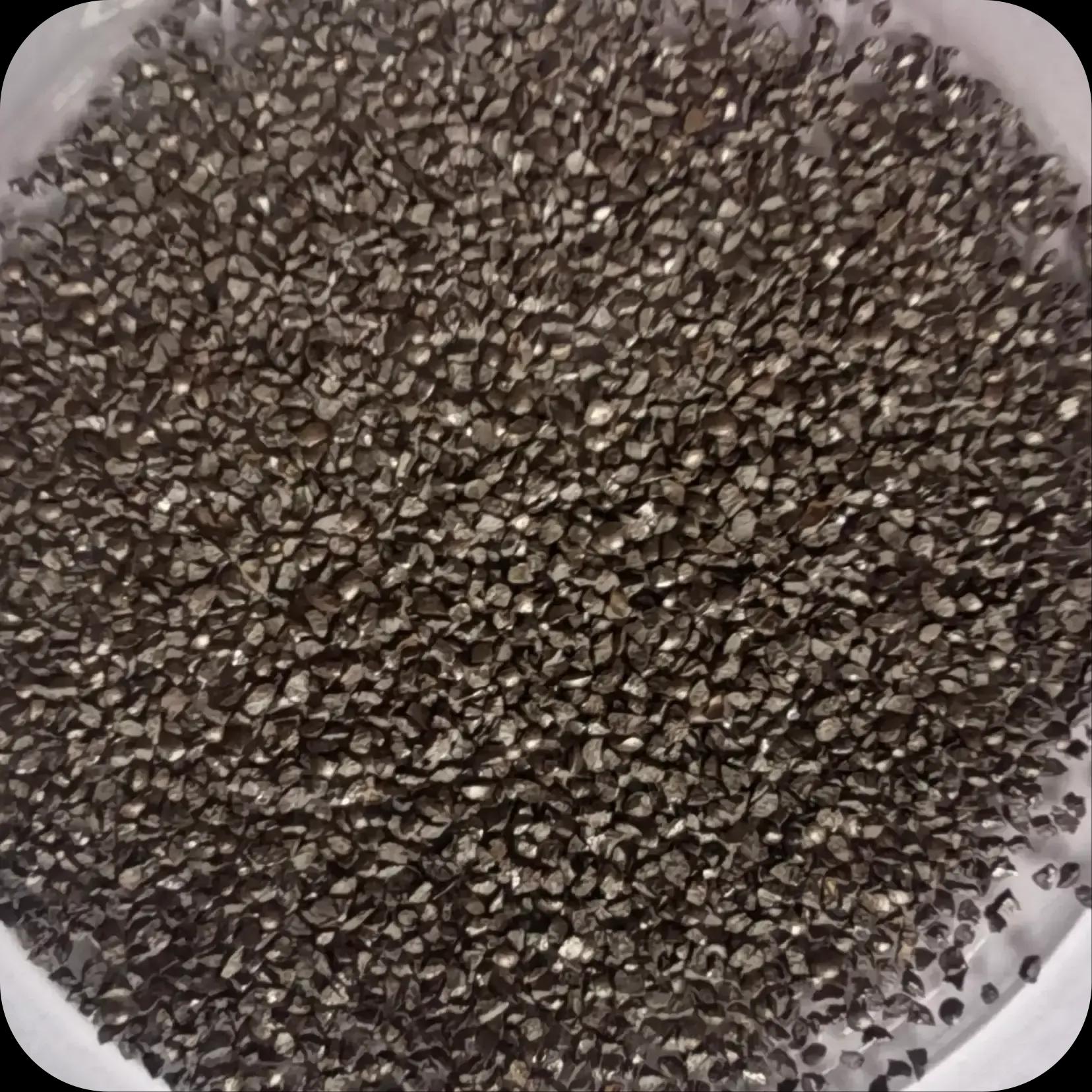
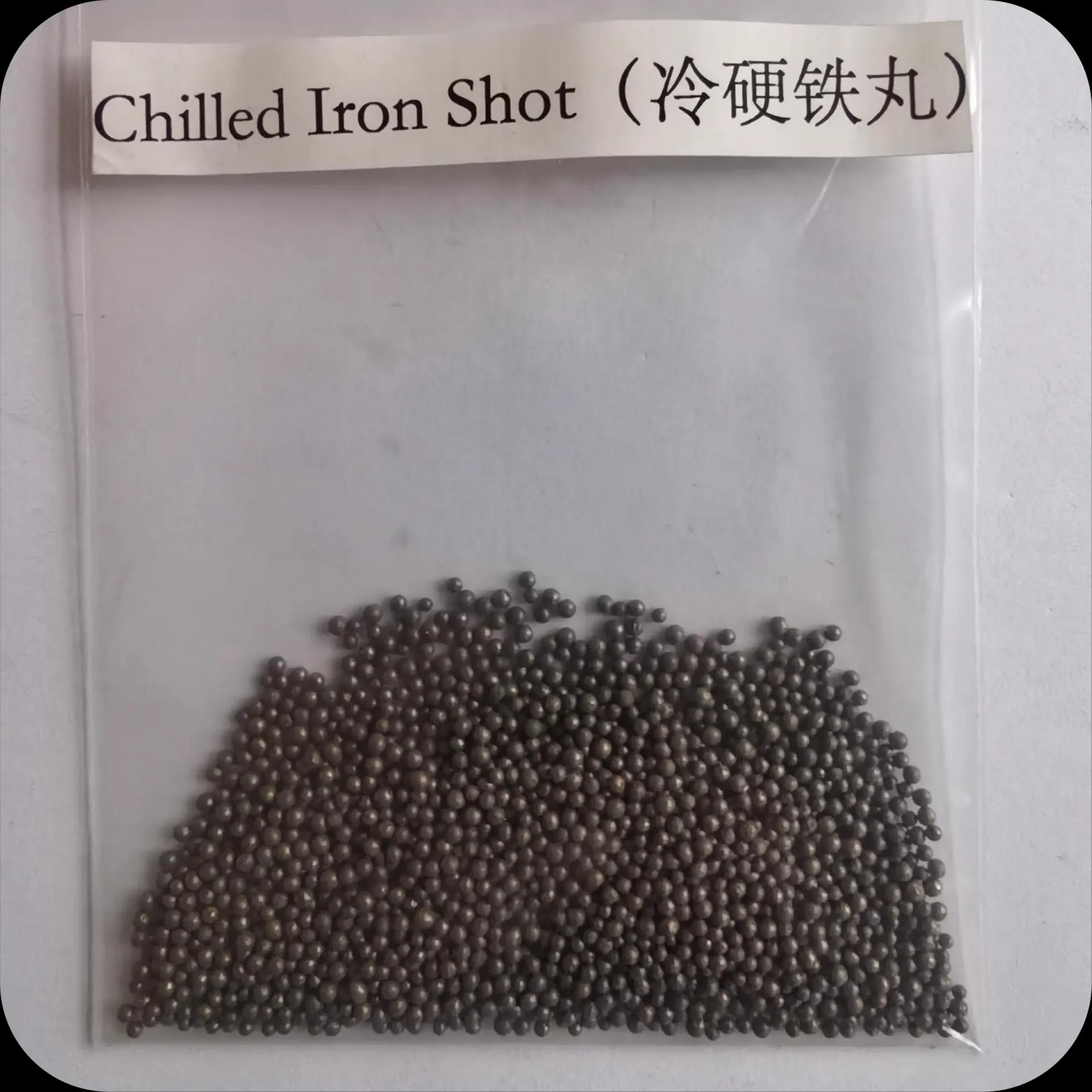
Iron Grit / Chilled Iron Grit | White cast iron angular abrasive, hardness 57-67 HRC (HV 650-800), ISO 11126-7 compliant
 1 / 6
1 / 6Iron Grit / Chilled Iron Grit | White cast iron angular abrasive, hardness 57-67 HRC (HV 650-800), ISO 11126-7 compliant. The most aggressive metal abrasive for heavy rust removal, thick coating stripping, surface profiling & stone processing. Most economical option, lowest unit price.
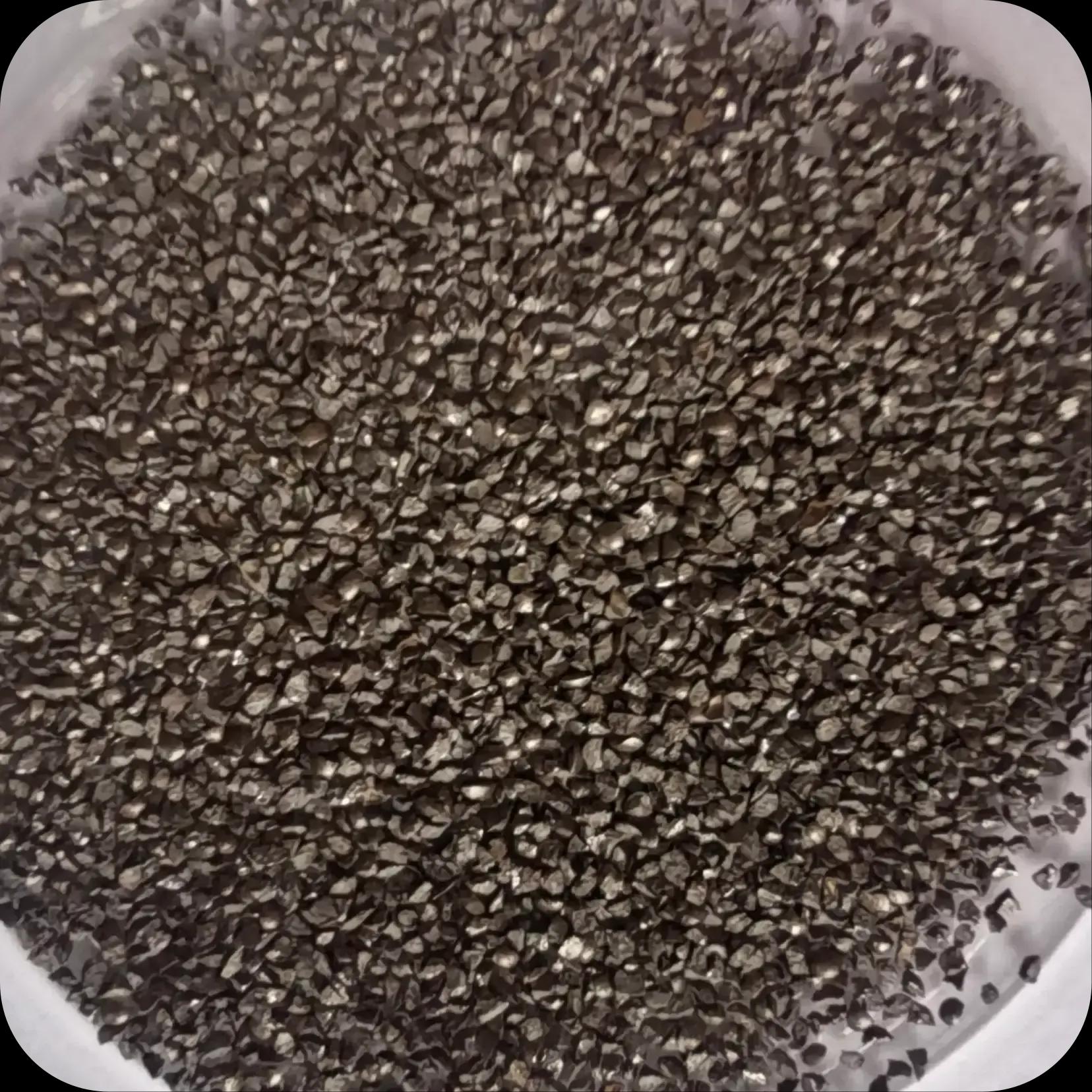
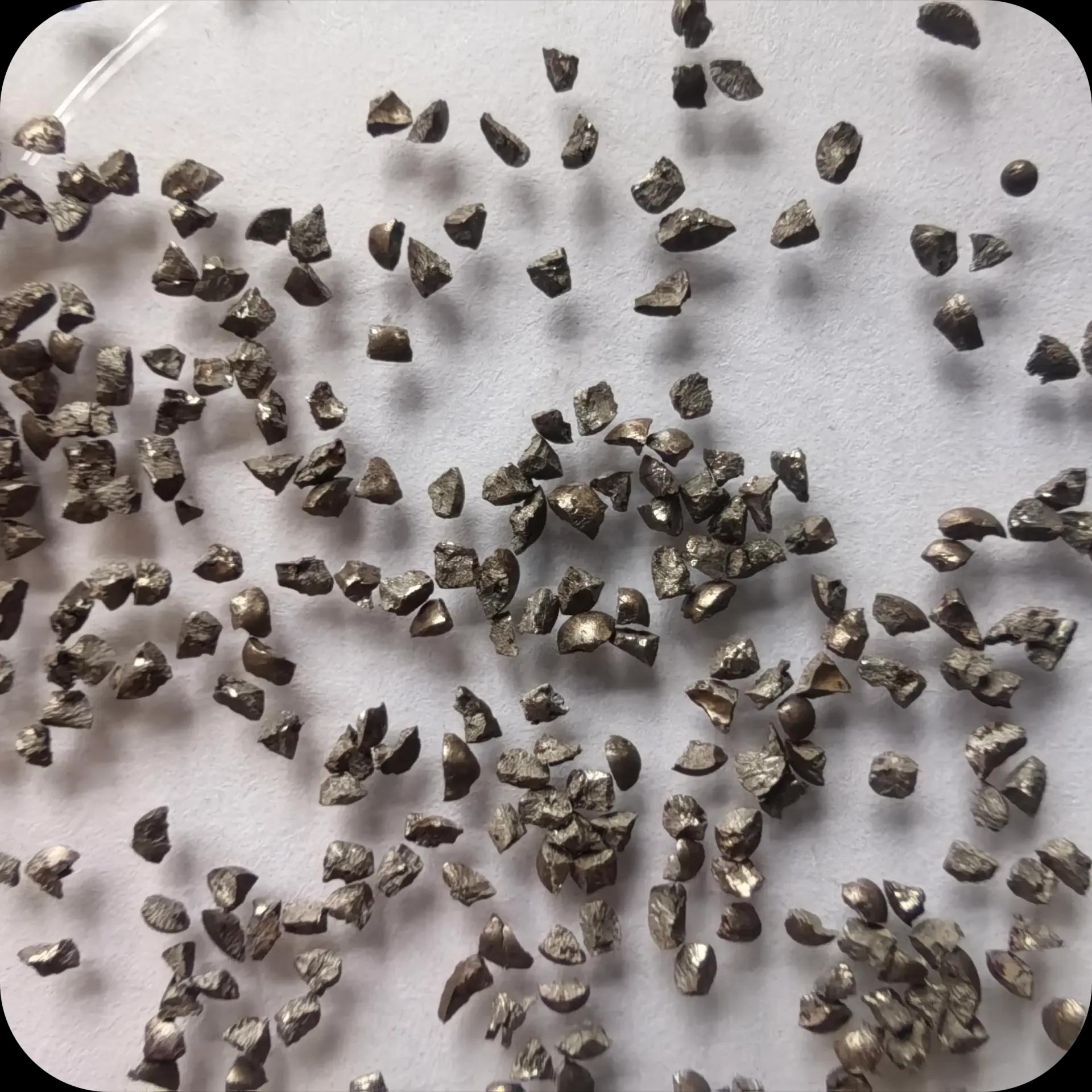
Iron grit is a cost-effective abrasive media made from high-quality cast iron, produced through a crushing process that yields angular, sharp-edged particles. Its high density and aggressive cutting action make it ideal for heavy-duty surface cleaning, rust removal, and surface profiling. Commonly used in foundries, shipbuilding, and heavy industrial applications.
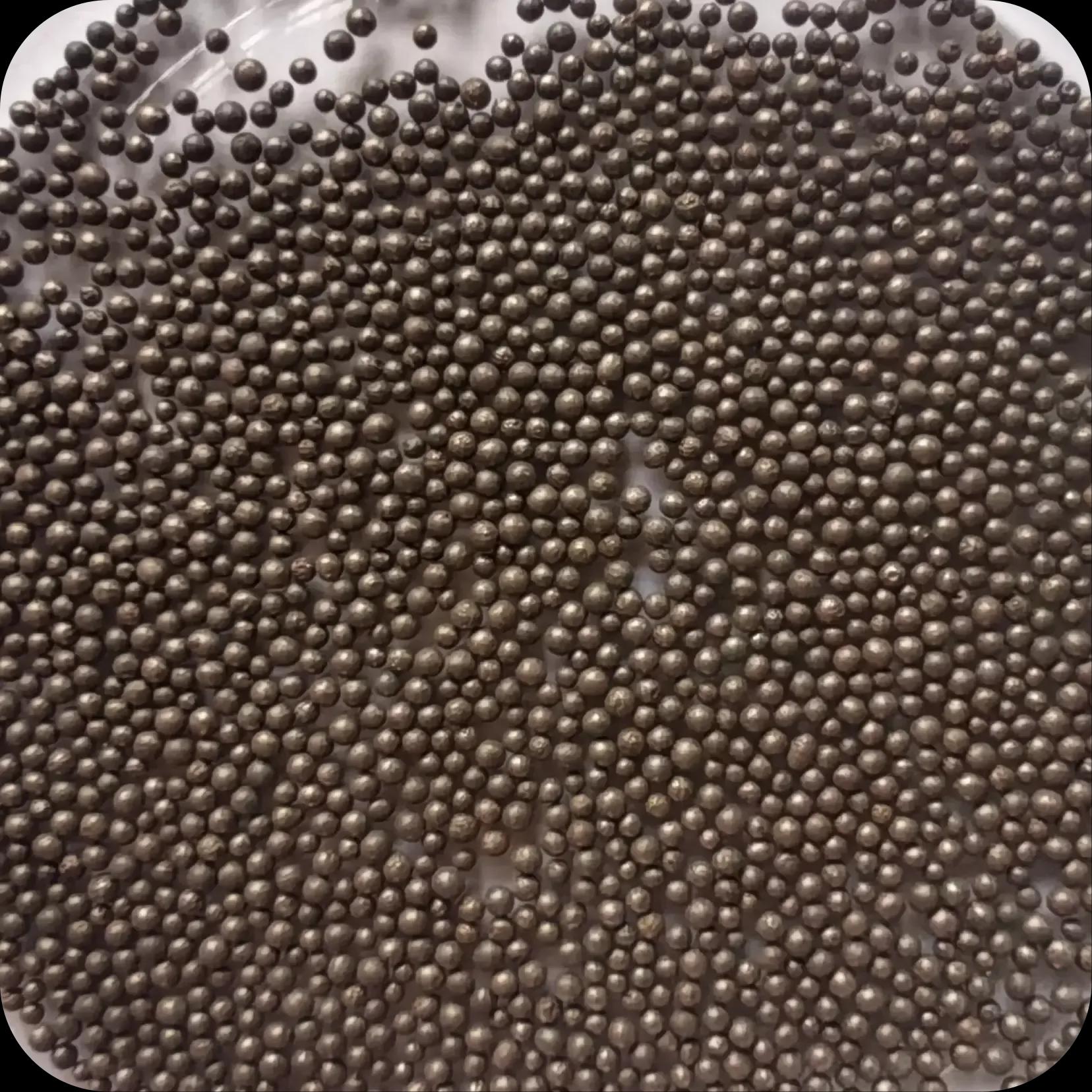
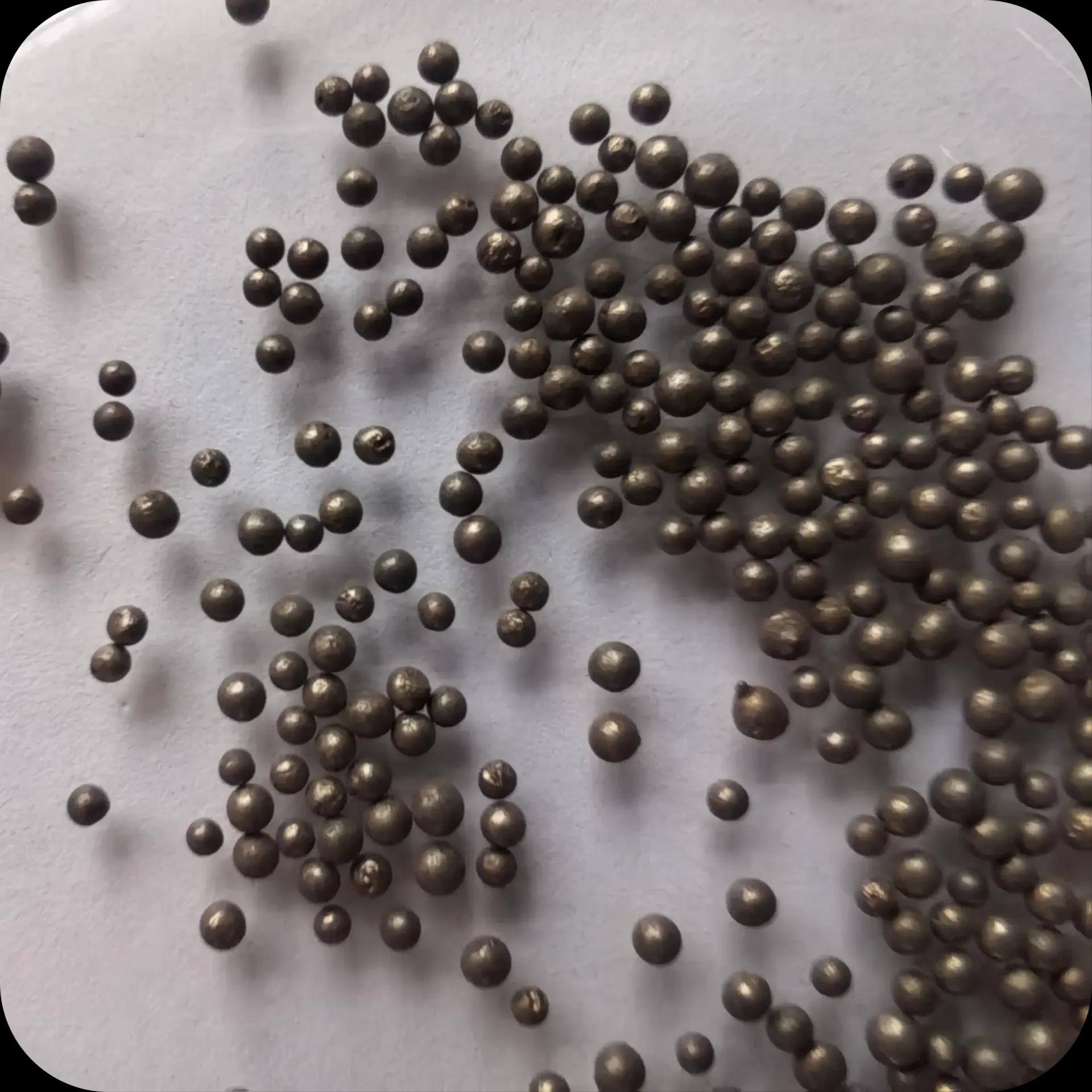
Chilled iron shot is produced from high-quality cast iron through centrifugal atomization, resulting in spherical or near-spherical particles. Its rounded shape and uniform hardness provide excellent performance in applications requiring consistent, controlled surface treatment. Used together with iron grit, chilled iron shot delivers optimal surface preparation results across various process conditions.
| Chemical Elements | Chilled Iron Shot / Grit |
|---|---|
| C | 2.80~3.40% |
| Mn | 0.30~1.00% |
| Si | 1.00~1.50% |
| S | 0.07~0.17% |
| P | 0.10~0.30% |
| Fe | Remainder |
| Average Hardness | 57-67 HRC |
| Microstructure | Deviation range for hardness |
| Bulk Density | 3.0-4.6 g/cm³ |
| Specific Gravity | 7 g/cm³ |
Minimum percentage of media between sizes shown varies from 60% to 100%, subject to particular grade. Full details on request.
| Size | Avg. Grain Distribution (mm) | Size | Avg. Grain Distribution (mm) |
|---|---|---|---|
| R34 | 0.85-1.18 | R80 | 2.00-2.80 |
| R39 | 1.00-1.40 | R95 | 2.36-3.35 |
| R47 | 1.18-1.70 | R111 | 2.80-4.00 |
| R55 | 1.40-2.00 | R132 | 3.35-4.75 |
| R66 | 1.70-2.36 |
Minimum percentage of media between sizes shown varies from 60% to 100%, subject to particular grade. Full details on request.
| Size | Avg. Grain Distribution (mm) | Size | Avg. Grain Distribution (mm) |
|---|---|---|---|
| G02 | 0.10-0.20 | G34 | 0.80-1.25 |
| G05 | 0.16-0.30 | G39 | 1.00-1.40 |
| G07 | 0.20-0.40 | G47 | 1.00-1.60 |
| G12 | 0.30-0.60 | G55 | 1.25-2.00 |
| G17 | 0.40-0.80 | G66 | 1.60-2.24 |
| G24 | 0.60-1.00 | G80 | 2.00-2.80 |
Chilled iron grit is a white cast iron abrasive produced by crushing, featuring sharp angular edges and high hardness (HV 650~800). It is primarily used for aggressive blast cleaning, surface profiling, and stone processing, with additional niche uses in ballasting and radiation shielding. Applications fall into five major categories:
| ✅ Suitable | ❌ Not Suitable |
|---|---|
| Heavy rust removal, thick coating stripping | Thin-walled precision parts (high impact causes deformation) |
| Applications requiring high-roughness coating substrate | Soft metals (aluminum, copper — excessive erosion) |
| Stone antiquing, surface roughening | Bright finishing only (prefer steel shot) |
Después del temple centrífugo primario, aplicamos un segundo ciclo de endurecimiento. Esto crea una microestructura más densa, inhibiendo significativamente la desviación de carbono. El resultado: 1.3× mayor vida útil, menor tasa de rotura, menos polvo, mejor elasticidad y mayor velocidad de limpieza.
Producción controlada de 8 pasos — desde acero bruto hasta abrasivo terminado, cada etapa está diseñada para la consistencia.
Horno de Arco Eléctrico
Ajustar la composición del acero para reducir el contenido dañino de azufre y fósforo.
Refinación en Cuchara
Purificar aún más el acero fundido para garantizar una calidad superior del material.
Fundición Centrífuga
Formación centrífuga de alta velocidad que controla la calidad de la forma y minimiza los defectos físicos.
Separación de Defectos
Eliminar partículas huecas o deformadas para mejorar la densidad y uniformidad de la granalla.
Endurecimiento Secundario
El doble temple refina la estructura del grano, mejorando la tenacidad e inhibiendo la desviación de carbono.
Tratamiento Térmico de Precisión
Control preciso de temperatura y tiempo para lograr una uniformidad de dureza óptima entre lotes.
Producción de Grit
Proceso de trituración único que mejora la plenitud y angularidad del grit minimizando las grietas internas.
Clasificación SAE J444
El tamizado de precisión garantiza que cada lote cumpla con la norma americana SAE-J444.
Cada lote de producción es verificado por 5 tipos de instrumentos de precisión antes de salir de fábrica. Estándares de prueba alineados con ASTM E92, GB/T4340.2 e ISO 6507-2.
Husillo sin fricción con prueba automatizada. Sistema micrométrico de precisión que elimina el error humano. Conforme a ASTM E92, GB/T4340.2 e ISO 6507-2.
Identifica y analiza la microestructura de metales y aleaciones. Valida la calidad de la materia prima y verifica la integridad microestructural post-tratamiento.
Detecta Si, Mn, P, Cr, Ni, Mo, Cu, Ti en hierro fundido, acero inoxidable, acero al carbono y acero aleado.
Sistema integrado óptico-mecánico-eléctrico-computacional. Amplio rango de medición, fuerte anti-interferencia, determinación C/S precisa y confiable.
Simula condiciones reales de granallado a 80 m/s de velocidad centrífuga con muestras de 200g. El ciclo de tamizado-reciclaje mide la durabilidad real de la granalla bajo estrés de producción.
Haga clic para ver especificaciones detalladas de cada modelo
Productos populares entre los clientes que navegan este producto
Granalla de Acero S70-S780 | Abrasivo esférico de acero al carbono, dureza HRC 40-50, conforme a SAE J827/ISO 11124. Par
Granalla Angular de Acero G12-G120 | Abrasivo angular de acero al carbono, dureza GP 46-50 / GL 56-60 / GH 63-65 HRC, co
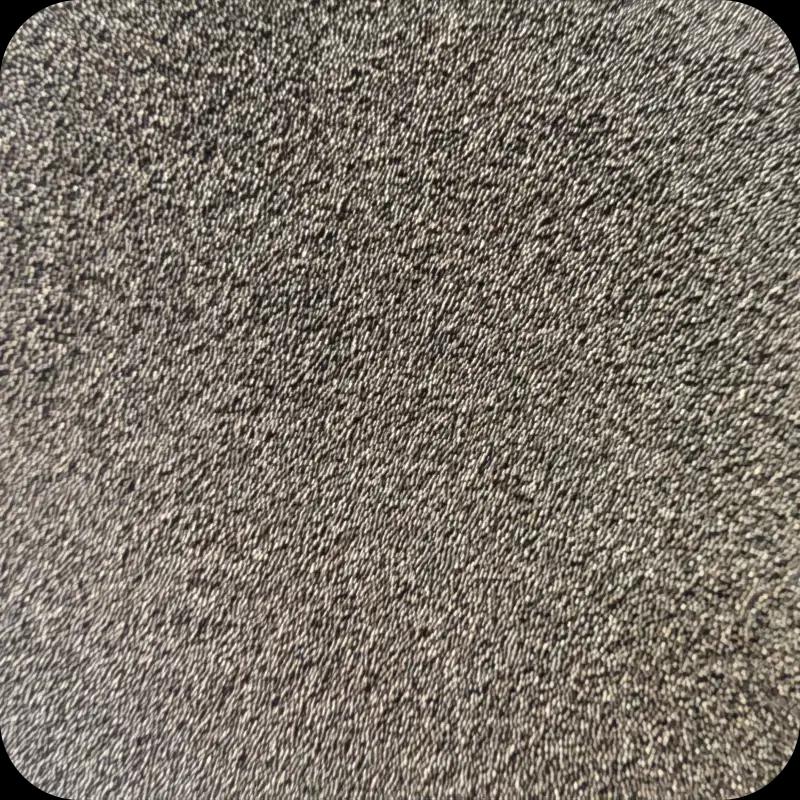
Ultra Fine Steel Shot UFSS | Super-fine blasting medium, particle size 0.1-0.7mm, high-carbon steel spherical abrasive.
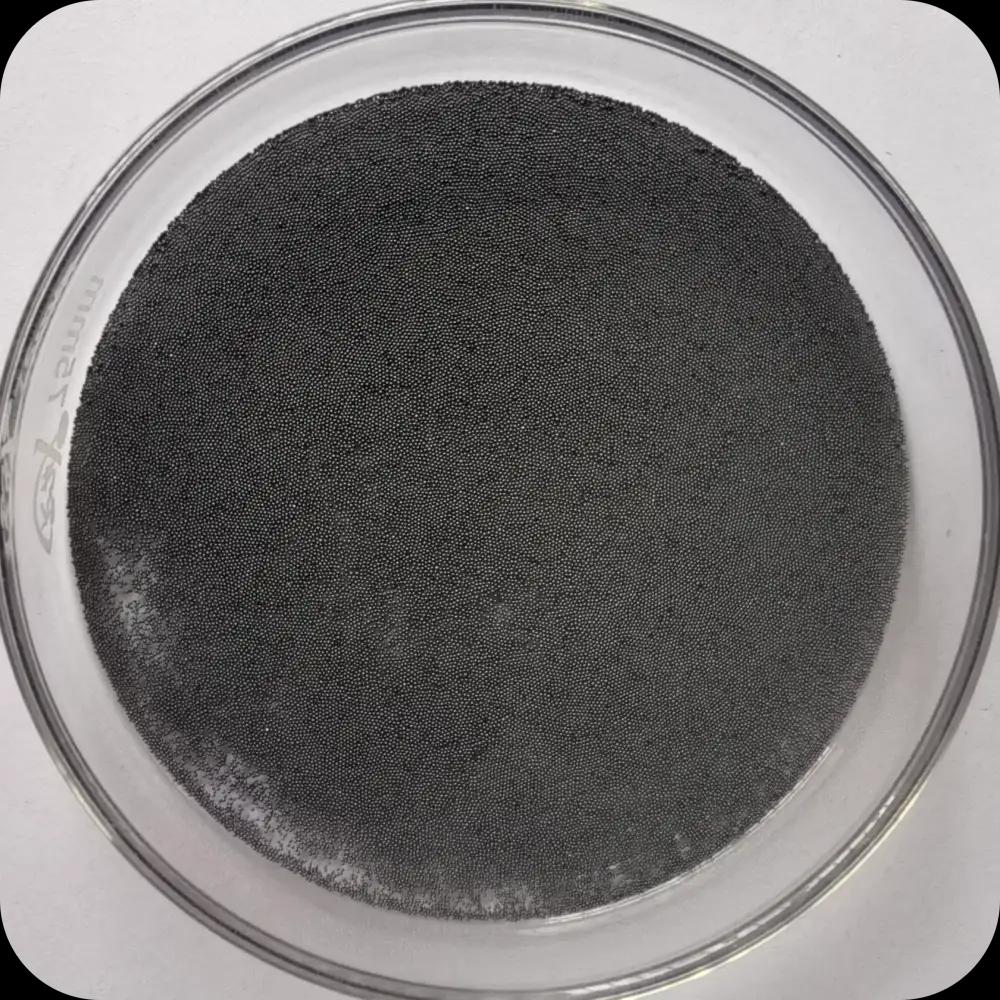
Aviation Steel Shot AMS 2431 | Aerospace-grade shot peening media, hardness 45-52 / 55-62 HRC, AMS 2431/1 & AMS 2431/2 c
Obtenga precio competitivo directo de fábrica en 24 horas. Sin compromiso.
Solicitar Cotización GratuitaSteel shot is spherical, ideal for precision cleaning and shot peening. Steel grit is angular with stronger cutting force, suitable for aggressive rust removal and surface profiling. Choose based on your workpiece requirements.
Steel Shot · Steel Grit · Deep-dive comparison
Steel shot is a spherical metallic abrasive manufactured through atomization. It's primarily used for shot blasting, shot peening, and surface preparation. It removes scale, rust, and old coatings while enhancing metal surface fatigue strength.
→ View Steel Shot S70-S780 product specs & selection guide